O Level A Maths 2014 Solutions
Please email me if you spot any mistakes or have any questions.
Additional materials:
- Provided formula sheet
- A Maths revision notes and questions — chapter-by-chapter explanations, worked examples and past year trends
- A Maths formulas and identities reference — quick reference for all formulas you'll need
Paper 1 Solutions
Click to display or to hide. ★ marks a notable question.
\begin{align} (2 - kx)^5 & = 2^5 + {5 \choose 1} (2)^4 (-kx) + {5 \choose 2} (2)^3 (-kx)^2 + {5 \choose 3} (2)^2 (-kx)^3 + ... \\ & = ... + (10)(4)(-k^3 x^3) + ... \\ & = ... - 40 k^3 x^3 + ... \\ \\ (3 + x)^6 & = 3^6 + {6 \choose 1} (3)^5 (x) + {6 \choose 2} (3)^4 (x)^2 + {6 \choose 3} (3)^3 (x)^3 + ... \\ & = ... + (20)(27)(x^3) + ... \\ & = ... + 540 x^3 + ... \\ \\ \text{Coefficient of } x^3 & = -40k^3 + 540 \\ 860 & = -40k^3 + 540 \\ 40k^3 & = 540 - 860 \\ 40k^3 & = -320 \\ k^3 & = {-320 \over 40} \\ k^3 & = -8 \\ k & = \sqrt[3]{-8} \\ k & = -2 \end{align}
Question 2 - Trigonometry: Addition formula, exact value of sin A
\begin{align} \tan (A + B) & = {\tan A + \tan B \over 1 - \tan A \tan B} \\ 8 & = {\tan A + 3 \over 1 - (\tan A)(3) } \\ 8 & = {\tan A + 3 \over 1 - 3 \tan A } \\ 8(1 - 3 \tan A) & = \tan A + 3 \\ 8 - 24 \tan A & = \tan A + 3 \\ -25 \tan A & = -5 \\ \tan A & = {-5 \over -25} \\ \tan A & = {1 \over 5} \phantom{000000} \left[ {Opp \over Adj} \right] \end{align}

\begin{align} \sqrt{1^2 + 5^2} & = \sqrt{26} \\ \\ \sin A & = {1 \over \sqrt{26}} \phantom{000000} \left[ {Opp \over Hyp} \right] \\ & = {1 \over \sqrt{26}} \times {\sqrt{26} \over \sqrt{26}} \\ & = {\sqrt{26} \over 26} \end{align}
Question 3 - Application of differentiation: Connected rate of change
\begin{align} y & = 2 - {1 \over x^2} \\ y & = 2 - x^{-2} \\ \\ {dy \over dx} & = - (-2)x^{-3} \\ & = 2 x^{-3} \\ & = {2 \over x^3} \\ \\ {dy \over dt} & = {dy \over dx} \times {dx \over dt} \\ 0.03 & = {2 \over x^3} \times 0.12 \\ {3 \over 100} & = {2 \over x^3} \times {3 \over 25} \\ {3 \over 100} & = {6 \over 25x^3} \\ 3(25x^3) & = 6(100) \\ 75x^3 & = 600 \\ x^3 & = {600 \over 75} \\ x^3 & = 8 \\ x & = \sqrt[3]{8} \\ x & = 2 \\ \\ \text{Substitute } & x = 2 \text{ into } y = 2 - {1 \over x^2} \\ y & = 2 - {1 \over 2^2} \\ y & = 1{3 \over 4} \end{align}
Question 4 - Partial fractions
\begin{align} { (x + 2)^2 \over x^2 (x - 2)} & = {A \over x} + {B \over x^2} + {C \over x - 2} \\ & = {A(x)(x - 2) \over x^2 (x - 2)} + {B(x - 2) \over x^2 (x - 2)} + {C(x^2) \over x^2 (x - 2)} \\ & = {Ax(x - 2) + B(x - 2) + Cx^2 \over x^2 (x - 2)} \\ \\ (x + 2)^2 & = Ax(x - 2) + B(x - 2) + Cx^2 \\ \\ \text{Let } & x = 0, \\ 2^2 & = 0 + B(-2) + 0 \\ 4 & = -2B \\ {4 \over -2} & = B \\ -2 & = B \\ \\ (x + 2)^2 & = Ax(x - 2) - 2(x - 2) + Cx^2 \\ \\ \text{Let } & x = 2, \\ 4^2 & = 0 - 0 + C(2)^2 \\ 16 & = 4C \\ {16 \over 4} & = C \\ 4 & = C \\ \\ (x + 2)^2 & = Ax(x - 2) - 2(x - 2) + 4x^2 \\ \\ \text{Let } & x = 1, \\ 3^2 & = A(1)(-1) - 2(-1) + 4(1)^2 \\ 9 & = -A + 2 + 4 \\ A & = 2 + 4 - 9 \\ A & = -3 \\ \\ \therefore { (x + 2)^2 \over x^2 (x - 2)} & = {-3 \over x} + {-2 \over x^2} + {4 \over x - 2} \\ & = -{3 \over x} - {2 \over x^2} + {4 \over x - 2} \end{align}
(i)
| $$ {1 \over u} $$ | $$ 6.667 $$ | $$ 5 $$ | $$ 4 $$ | $$ 3.333 $$ |
|---|---|---|---|---|
| $$ {1 \over v} $$ | $$ 1.658 $$ | $$ 3.344 $$ | $$ 3.802 $$ | $$ 4.975 $$ |

$$ \text{Incorrect: } {1 \over v} = 3.802, v = 0.263 $$
On a phone, tap the diagram to see it full size (and tap again to fit).
(ii)
\begin{align} \text{From graph, } {1 \over v} & = 4.35 \\ 1 & = 4.35v \\ \\ v & = {1 \over 4.35} \\ v & \approx 0.230 \end{align}
(iii)
\begin{align*} {1 \over u} + {1 \over v} & = {1 \over f} \\ {1 \over v} & = - {1 \over u} + {1 \over f} \\ {1 \over v} & = (-1) \left(1 \over u\right) + {1 \over f} \phantom{000000} [Y = mX + c] \\ \\ \text{Using } & (4, 4.35), \\ 4.35 & = - (4) + {1 \over f} \\ -{1 \over f} & = -4 - 4.35 \\ -{1 \over f} & = -8.35 \\ {1 \over f} & = 8.35 \\ 1 & = 8.35 f \\ {1 \over 8.35} & = f \\ 0.120 & \approx f \end{align*}
Question 6 - Trigonometry: Prove identity, then use identity to solve equation
(i)
\begin{align} \text{L.H.S} & = {1 \over (1 + \text{cosec } \theta)(\sec \theta - \tan \theta)} \\ & = {1 \over \left(1 + {1 \over \sin \theta}\right)\left({1 \over \cos \theta} - {\sin \theta \over \cos \theta} \right) } \\ & = {1 \over \left({\sin \theta \over \sin \theta} + {1 \over \sin \theta}\right) \left({1 - \sin \theta \over \cos \theta}\right) } \\ & = {1 \over \left( {\sin \theta + 1 \over \sin \theta} \right)\left({1 - \sin \theta \over \cos \theta}\right) } \\ & = {1 \over {(\sin \theta + 1)(1 - \sin \theta) \over \sin \theta \cos \theta} } \\ & = {\sin \theta \cos \theta \over (\sin \theta + 1)(1 - \sin \theta)} \\ & = {\sin \theta \cos \theta \over \sin \theta - \sin^2 \theta + 1 - \sin \theta} \\ & = {\sin \theta \cos \theta \over 1 - \sin^2 \theta} \\ & = {\sin \theta \cos \theta \over \cos^2 \theta} \phantom{0000000} [\sin^2 A + \cos^2 A = 1 \implies \cos^2 A = 1 - \sin^2 A] \\ & = {\sin \theta \over \cos \theta} \\ & = \tan \theta \\ & = \text{R.H.S} \end{align}
(ii)
\begin{align} {1 \over (1 + \text{cosec } \theta)(\sec \theta - \tan \theta)} & = 3 \cot \theta \\ \tan \theta & = 3 \cot \theta \phantom{000000} [\text{Apply identity from (i)}] \\ \tan \theta & = {3 \over \tan \theta} \\ \tan^2 \theta & = 3 \\ \tan \theta & = \pm \sqrt{3} \phantom{000000} [\text{All four quadrants}] \\ \\ \text{Basic angle, } \alpha & = \tan^{-1} ( \sqrt{3} ) \\ & = 60^\circ \\ & = {\pi \over 3} \end{align}

\begin{align} \theta & = {\pi \over 3}, \pi - {\pi \over 3}, \pi + {\pi \over 3}, 2\pi - {\pi \over 3} \\ & = {\pi \over 3}, {2\pi \over 3}, {4\pi \over 3}, {5\pi \over 3} \\ \\ \text{Acute angle} & = {\pi \over 3} \end{align}
Question 7 - Coordinate geometry: Trapezium, coordinates and area★ Part (i)
(i)
\begin{align} \text{Substitute } & x = h \text{ into } y = 2x, \\ y & = 2(h) \\ y & = 2h \\ \\ \therefore & \phantom{.} A(h, 2h) \\ \\ \text{Substitute } & x = h \text{ into } y = {1 \over 2}x, \\ y & = {1 \over 2} (h) \\ y & = {1 \over 2} h \\ \\ \therefore & \phantom{.} C \left(h, {1 \over 2}h \right) \\ \\ \text{Eqn of } OA: & \phantom{.} y = 2x \phantom{000000} [y = mx + c] \\ \\ \text{Gradient of } CB & = \text{Gradient of } OA = 2 \\ \\ y & = mx + c \\ y & = 2x + c \\ \\ \text{Using } & C \left(h, {1 \over 2}h\right), \\ {1 \over 2}h & = 2h + c \\ -{3 \over 2}h & = c \\ \\ \text{Eqn of } CB: & \phantom{.} y = 2x - {3 \over 2}h \\ \\ \text{Let } & y = 2h, \phantom{000000} [y \text{-coordinate of } A = y \text{-coordinate of } B] \\ 2h & = 2x - {3 \over 2}h \\ {7 \over 2}h & = 2x \\ {7 \over 2}h \div 2 & = x \\ {7 \over 4}h & = x \\ \\ \therefore & \phantom{.} B \left({7 \over 4}h, 2h \right) \end{align}
(ii)
\begin{align} O(0, 0), A(4, 8), & \phantom{.} B(7, 8), C(4, 2) \\ \\ \text{Area of trapezium} & = {1 \over 2} \left| \begin{matrix} 7 & 4 & 0 & 4 & 7 \\ 8 & 8 & 0 & 2 & 8 \end{matrix} \right| \phantom{000000} [\text{Anti-clockwise: } B, A, O, C, B] \\ & = {1 \over 2} [ 7 \times 8 + 4 \times 0 + 0 \times 2 + 4 \times 8 ] - {1 \over 2} [ 8 \times 4 + 8 \times 0 + 0 \times 4 + 2 \times 7 ] \\ & = 21 \text{ units}^2 \end{align}
Question 8 - Differentiation and integration★ Notable
\begin{align} f'(x) & = \sin 4x - \cos 2x \\ \\ f''(x) & = {d \over dx} (\sin 4x - \cos 2x) \\ & = 4 \cos 4x - 2 (- \sin 2x) \phantom{000000} \left[ {d \over dx} [ \sin f(x)] = f'(x). \cos f(x) \text{ and } {d \over dx} [\cos f(x)] = f'(x) . - \sin f(x) \right] \\ & = 4 \cos 4x + 2 \sin 2x \\ \\ f(x) & = \int \sin 4x - \cos 2x \phantom{.} dx \\ & = {- \cos 4x \over 4} - {\sin 2x \over 2} + c \phantom{000000} \left[ \int \sin f(x) \phantom{.} dx = {-\cos f(x) \over f'(x)} \text{ and } \int \cos f(x) \phantom{.} dx = {\sin f(x) \over f'(x)} \right] \\ & = -{1 \over 4} \cos 4x - {1 \over 2} \sin 2x + c \\ \\ f \left({\pi \over 2}\right) & = - {1 \over 4} \cos \left[ 4 \left(\pi \over 2\right) \right] - {1 \over 2} \sin \left[ 2 \left(\pi \over 2\right) \right] + c \\ 0 & = -{1 \over 4} - 0 + c \\ {1 \over 4} & = c \\ \\ f(x) & = -{1 \over 4} \cos 4x - {1 \over 2} \sin 2x + {1 \over 4} \\ \\ \\ f''(x) + 4f(x) & = 4 \cos 4x + 2 \sin 2x + 4 \left(-{1 \over 4} \cos 4x - {1 \over 2} \sin 2x + {1 \over 4}\right) \\ & = 4 \cos 4x + 2 \sin 2x - \cos 4x - 2 \sin 2x + 1 \\ & = 3 \cos 4x + 1 \phantom{0} \text{ (Shown)} \end{align}
Question 9 - Equation and inequalities
(i)
\begin{align}
y & = ax^2 + 5x + a - 5 \\
y & = 2x^2 + 5x + 2 - 5 \\
y & = 2x^2 + 5x - 3
\end{align}
\begin{align}
y & > 9 \\
2x^2 + 5x - 3 & > 9 \\
2x^2 + 5x - 12 & > 0 \\
(x + 4)(2x - 3) & > 0
\end{align}

$$ x < -4 \text{ or } x > {3 \over 2} $$
(ii)
\begin{align} y & = ax^2 + 5x + a - 5 \\ y & = 4x^2 + 5x + 4 - 5 \\ y & = 4x^2 + 5x - 1 \\ \\ \text{Substitute } & y = x - 2 \text{ into eqn of curve,} \\ x - 2 & = 4x^2 + 5x - 1 \\ 0 & = 4x^2 + 4x + 1 \\ \\ b^2 - 4ac & = (4)^2 - 4(4)(1) \\ & = 0 \\ \\ \implies y = x - 2 & \text{ is tangent to the curve} \end{align}
(iii)
\begin{align}
y & = ax^2 + 5x + a - 5 \\
\\
\text{Substitute } & y = x - 2 \text{ into eqn of curve,} \\
x - 2 & = ax^2 + 5x + a - 5 \\
0 & = ax^2 + 4x + a - 3 \\
\\
b^2 - 4ac & = (4)^2 - 4(a)(a - 3) \\
& = 16 - 4a(a - 3) \\
& = 16 - 4a^2 + 12a \\
\\
b^2- 4ac & = 0 \phantom{000000} [\text{Line is tangent to curve}] \\
16 - 4a^2 + 12a & = 0 \\
0 & = 4a^2 - 12a - 16 \\
0 & = a^2 - 3a - 4 \\
0 & = (a + 1)(a - 4)
\end{align}
\begin{align}
a + 1 & = 0 && \text{ or } & a - 4 & =0 \\
a & = -1 &&& a & = 4
\end{align}
$$ \text{Other value of } a = -1 $$
Question 10 - Application of Differentiation: Maximisation problem
(i)
\begin{align} \text{Area of triangle} & = {1 \over 2} ab \sin C \\ & = {1 \over 2}(x)(x) \sin 60^\circ \\ & = {1 \over 2} x^2 \left(\sqrt{3} \over 2\right) \\ & = {\sqrt{3} \over 4} x^2 \\ \\ \text{Area of rectangle} & = l \times x \\ & = lx \\ \\ \text{Perimeter} & = 4x + 2l \\ 130 & = 4x + 2l \\ 65 & = 2x + l \\ 65 - 2x & = l \\ \\ \text{Area of rectangle} & = (65 - 2x)x \\ & = 65x - 2x^2 \\ \\ \text{Area of plot} & = 2 \times {\sqrt{3} \over 4} x^2 + 65x - 2x^2 \\ & = {\sqrt{3} \over 2}x^2 + 65x - 2x^2 \\ & = {\sqrt{3}x^2 \over 2} + {130x \over 2} - {4x^2 \over 2} \\ & = {\sqrt{3}x^2 + 130x - 4x^2 \over 2} \\ & = {130x - (4 - \sqrt{3})x^2 \over 2} \text{ m}^2 \text{ (Shown)} \end{align}
(ii)
\begin{align} \text{Let } A & = {\sqrt{3} \over 2}x^2 + 65x - 2x^2 \\ \\ {dA \over dx} & = {\sqrt{3} \over 2}(2)(x) + 65 - 2(2)x \\ & = \sqrt{3} x + 65 - 4x \\ \\ \text{Let } & {dA \over dx} = 0, \\ 0 & = \sqrt{3} x + 65 - 4x \\ 4x - \sqrt{3} x & = 65 \\ x(4 - \sqrt{3}) & = 65 \\ x & = {65 \over 4 - \sqrt{3}} \\ x & = 28.66 \\ x & \approx 28.7 \end{align}
(iii)
\begin{align} {dA \over dx} & = \sqrt{3} x + 65 - 4x \\ \\ {d^2 A \over dx^2} & = \sqrt{3} + 0 - 4 \\ & = -2.2679 < 0 \\ \\ \therefore \text{When } x & \approx 28.7, \text{ area is the largest possible} \end{align}
Question 11 - Application of Differentiation: Tangent and Normal to the curve★ Notable
(i)
\begin{align}
u & = x &&& v & = \ln x \\
{du \over dx} & = 1 &&& {dv \over dx} & = {1 \over x}
\end{align}
\begin{align}
{dy \over dx} & = (x)\left(1 \over x\right) + (\ln x)(1) \\
& = 1 + \ln x \\
\\
y & = 2x - 3 \phantom{000000} [y = mx + c] \\
\\
\text{Gradient of tangent at } P & = 2 \\
\\
\text{Let } & {dy \over dx} = 2, \\
2 & = 1 + \ln x \\
1 & = \ln x \\
1 & = \log_e x \\
e^1 & = x \\
e & = x \\
\\
\text{Substitute } & x = e \text{ into eqn of curve,} \\
y & = (e)(\ln e) \\
y & = (e)(1) \\
y & = e \\
\\
\therefore & \phantom{.} P(e, e)
\end{align}
(ii)
\begin{align} \text{Gradient of normal at } P & = {-1 \over \text{Gradient of tangent at } P } \phantom{000000} [m_1 \times m_2 = -1] \\ & = {-1 \over 2} \\ & = -{1 \over 2} \\ \\ y & = mx + c \\ y & = -{1 \over 2}x + c \\ \\ \text{Using } & P(e, e), \\ e & = -{1 \over 2}e + c \\ {3 \over 2}e & = c \\ \\ \text{Eqn of normal at } P: & \phantom{0} y = -{1 \over 2}x + {3 \over 2}e \phantom{00} \text{--- (1)} \\ \\ & \phantom{0} y = 2x - 3 \phantom{00} \text{--- (2)} \\ \\ \text{Substitute } & \text{(1) into (2),} \\ -{1 \over 2}x + {3 \over 2}e & = 2x - 3 \\ -{1 \over 2}x - 2x & = - 3 - {3 \over 2}e \\ -{5 \over 2}x & = -3 - {3 \over 2}e \\ {5 \over 2}x & = 3 + {3 \over 2}e \\ 5x & = 6 + 3e \\ 5x & = 3(e + 2) \\ x & = {3 \over 5}(e + 2) \\ \\ \therefore k & = {3 \over 5} \end{align}
Question 12 - Modulus function (Old syllabus)★ Notable
(i)
\begin{align} \text{Minimum value of } y & = -4 \text{ when } x = {3 \over 2} \\ \\ \therefore \text{Minimum } & \text{point: } \left({3 \over 2}, -4\right) \end{align}
(ii)
\begin{align}
\text{Let } & y = 0, \\
0 & = (2x - 3)^2 - 4 \\
4 & = (2x - 3)^2 \\
\pm \sqrt{4} & = 2x - 3 \\
\pm 2 & = 2x - 3
\end{align}
\begin{align}
2x - 3 & = 2 && \text{ or } & 2x - 3 & = -2 \\
2x & = 5 &&& 2x & = 1 \\
x & = {5 \over 2} &&& x & = {1 \over 2} \\
\\
\therefore & \phantom{.} \left({5 \over 2}, 0\right) &&& \therefore & \phantom{.} \left({1 \over 2}, 0\right)
\end{align}
(iii)
\begin{align} y & = (2x - 3)^2 - 4 \\ \\ \text{Let } & x = 0, \\ y & = [2(0) - 3]^2 - 4 \\ y & = 5 \phantom{0000000000000000} [y \text{-intercept}] \\ \\ x & \text{-intercepts: } {1 \over 2}, {5 \over 2} \\ \\ \text{Mi} & \text{nimum point: } \left({3 \over 2}, - 4\right) \end{align}

(iv)(a)
$$ 2 \text{ solutions} $$
(iv)(b)
$$ 4 \text{ solutions} $$
(iv)(c)
\begin{align} | (2x - 3)^2 - 4| + 2 & = 0 \\ | (2x - 3)^2 - 4| & = -2 \\ \\ \therefore 0 & \text{ solutions} \end{align}
Paper 2 Solutions
Click to display or to hide. ★ marks a notable question.
Question 1 - Exponential functions (real-life problem)
(i)
\begin{align} \text{When } & t = 0 \text{ and } T = 80, \\ 80 & = 20 + Ae^{-k(0)} \\ 80 & = 20 + Ae^0 \\ 60 & = A(1) \\ 60 & = A \end{align}
(ii)
\begin{align} T & = 20 + 60e^{-kt} \\ \\ \text{When } & t = 1 \text{ and } T = 65, \\ 65 & = 20 + 60e^{-k(1)} \\ 45 & = 60e^{-k} \\ {45 \over 60} & = e^{-k} \\ \ln {45 \over 60} & = \ln e^{-k} \\ \ln {45 \over 60} & = -k \ln e \phantom{000000} [\text{Power law (logarithms)}] \\ \ln {45 \over 60} & = -k (1) \\ \ln {45 \over 60} & = -k \\ \\ k & = - \ln {45 \over 60} \\ k & = 0.28768 \\ k & \approx 0.288 \end{align}
(iii)
\begin{align} T & = 20 + 60e^{-kt} \\ \\ \text{When } & t = 4, \\ T & = 20 + 60e^{-(0.28768)(4)} \\ T & = 38.984 \\ \\ \therefore \text{Safe to give } & \text{the food 4 minutes after removal} \end{align}
Question 2 - Polynomials: Remainder theorem, factor theorem, solve cubic
(i)
\begin{align} f(2) & = 2(2)^3 - 3(2)^2 - 11(2) + 6 \\ & = -12 \\ \\ \text{Remainder} & = -12 \end{align}
(ii)
\begin{align}
f(-2) & = 2(-2)^3 - 3(-2)^2 - 11(-2) + 6 \\
& = 0 \\
\\
\therefore x + 2 & \text{ is a factor of } f(x)
\end{align}
$$
\require{enclose}
\begin{array}{rll}
2x^2 - 7x + 3 \phantom{0000000.}\\
x + 2 \enclose{longdiv}{ 2x^3 - 3x^2 - 11x + 6 \phantom{0}}\kern-.2ex \\
-\underline{( 2x^3 + 4x^2 ){\phantom{000000000}}} \\
- 7x^2 - 11x + 6 \phantom{0} \\
-\underline{( -7x^2 - 14x){\phantom{000.}}} \\
3x + 6 \phantom{0} \\
-\underline{( 3x + 6){\phantom{.}}} \\
0 \phantom{.}
\end{array}
$$
\begin{align}
2x^3 - 3x^2 - 11x + 6 & = (x + 2)(2x^2 - 7x + 3) \\
& = (x + 2)(2x - 1)(x - 3) \\
\\
(x + 2)(2x - 1)(x - 3) & = 0
\end{align}
\begin{align}
x + 2 & = 0 && \text{ or } & 2x - 1 & = 0 && \text{ or } & x - 3 & = 0 \\
x & = -2 &&& 2x & = 1 &&& x & = 3 \\
& &&& x & = {1 \over 2}
\end{align}
(i)
\begin{align} 13 - \sqrt{48} & = 13 - \sqrt{16} \sqrt{3} \\ & = 13 - 4 \sqrt{3} \\ \\ \text{Length} & = {\text{Area} \over \text{Width}} \\ & = {13 - 4 \sqrt{3} \over 3 - \sqrt{3}} \times { 3 + \sqrt{3} \over 3 + \sqrt{3} } \\ & = {39 + 13 \sqrt{3} - 12 \sqrt{3} - 4(3) \over 9 + 3 \sqrt{3} - 3 \sqrt{3} - 3 } \\ & = {27 + \sqrt{3} \over 6} \\ & = {27 \over 6} + {\sqrt{3} \over 6} \\ & = \left( {9 \over 2} + {1 \over 6} \sqrt{3} \right) \text{ cm} \end{align}
(ii)
\begin{align}
\text{Area of square} & = \text{Length}^2 \\
13 - 4 \sqrt{3} & = (2 \sqrt{3} + c)^2 \\
13 - 4 \sqrt{3} & = (2 \sqrt{3})^2 + 2(2 \sqrt{3})(c) + c^2
\phantom{000000} [(a + b)^2 = a^2 + 2ab + b^2] \\
13 - 4 \sqrt{3} & = 12 + 4c \sqrt{3} + c^2 \\
13 - 4 \sqrt{3} & = 12 + c^2 + 4c \sqrt{3}
\end{align}
\begin{align}
13 & = 12 + c^2 &&& - 4 & = 4c \\
1 & = c^2 &&& {-4 \over 4} & = c \\
\pm \sqrt{1} & = c &&& -1 & = c \\
\pm 1 & = c
\end{align}
$$ \therefore c = -1 $$
Question 4 - Sum and product of roots of a quadratic equation (Old syllabus)
(i)
\begin{align} \text{Sum of roots, } \alpha + \beta & = -{b \over a} \\ & = -{5 \over 2} \\ \\ \text{Product of roots, } \alpha \beta & = {c \over a} \\ & = {4 \over 2} \\ & = 2 \\ \\ \alpha^2 + \beta^2 & = (\alpha + \beta)^2 - 2\alpha \beta \\ & = \left(-{5 \over 2}\right)^2 - 2\left(2\right) \\ & = {9 \over 4} \end{align}
(ii)
\begin{align}
\text{Sum of roots, } \alpha^3 + \beta^3
& = (\alpha + \beta)(\alpha^2 - \alpha \beta + \beta^2) \\
& = (\alpha + \beta)[ (\alpha^2 + \beta^2) - \alpha \beta ] \\
& = \left(-{5 \over 2}\right) \left( {9 \over 4} - 2 \right) \\
& = -{5 \over 8} \\
\\
\text{Product of roots, } \alpha^3 \beta^3
& = (\alpha \beta)^3 \\
& = (2)^3 \\
& = 8
\end{align}
\begin{align}
x^2 - \text{(SOR)}x + \text{(POR)} & = 0 \\
x^2 - \left(-{5 \over 8}\right)x + 8 & = 0 \\
x^2 + {5 \over 8}x + 8 & = 0 \\
8x^2 + 5x + 64 & = 0
\end{align}
(a)
\begin{align}
2 \log_2 x - \log_2 (x - 4) & = 3 \\
\log_2 x^2 - \log_2 (x - 4) & = 3 \phantom{000000} [\text{Power law (logarithms)}] \\
\log_2 {x^2 \over x - 4} & = 3 \phantom{000000} [\text{Quotient law (logarithms)}] \\
{x^2 \over x - 4} & = 2^3 \\
{x^2 \over x - 4} & = 8 \\
x^2 & = 8(x - 4) \\
x^2 & = 8x - 32 \\
x^2 - 8x + 32 & = 0
\end{align}
\begin{align}
x & = {-b \pm \sqrt{b^2 - 4ac} \over 2a} \\
& = {-(-8) \pm \sqrt{(-8)^2 - 4(1)(32)} \over 2(1)} \\
& = {8 \pm \sqrt{-64} \over 2} \phantom{0} \text{ (No real solutions)}
\end{align}
(b)
\begin{align} { (\log_x y)^2 \over \log_y x } + 8 & = 0 \\ { (\log_x y)^2 \over \log_y x } & = - 8 \\ (\log_x y)^2 & = -8 \log_y x \\ (\log_x y)^2 & = - 8 \left(\log_x x \over \log_x y\right) \phantom{000000} [\text{Change-of-base}] \\ (\log_x y)^2 & = - 8 \left(1 \over \log_x y\right) \\ (\log_x y)^2 & = -{8 \over \log_x y} \\ (\log_x y)^3 & = -8 \\ \log_x y & = \sqrt[3]{-8} \\ \log_x y & = -2 \\ y & = x^{-2} \\ y & = {1 \over x^2} \end{align}
Question 6 - Plane geometry★ Notable
(i)
\begin{align} \text{Let } \angle ABC & = \theta \\ \\ \angle ACE & = \angle ABC \phantom{0} (\text{Alternate segment theorem}) \\ & = \theta \\ \\ \text{Since tangents} & \text{ at } A \text{ and at } C \text{ meet at } E, \phantom{.} AE = CE \\ \\ \angle CAE & = \angle ACE \phantom{0} (\text{Base angles of isosceles triangle}) \\ & = \theta \\ \\ \angle AEC & = 180^\circ - \theta - \theta \phantom{0} (\text{Angle sum of triangle}) \\ & = 180^\circ - 2 \theta \\ \\ \angle DEF & = 180^\circ - (180^\circ - 2 \theta) \phantom{0} (\text{Adjacent angles on a straight line}) \\ & = 180^\circ - 180^\circ + 2 \theta \\ & = 2 \theta \\ & = 2 \times \angle ABC \phantom{0} \text{ (Shown)} \end{align}
(ii)
\begin{align} \angle DFE & = 2 \times \angle FBA \\ & = 2 \times \angle ACB \end{align}
(iii)
\begin{align} \text{Let } \angle ACB & = \alpha \\ \\ \angle BAC & = 180^\circ - \alpha - \theta \phantom{0} (\text{Angle sum of triangle}) \\ \\ \text{Since } \angle DFE & = 2 \times \angle ACB, \\ \angle DFE & = 2 \alpha \\ \\ \angle EDF & = 180^\circ - \angle DFE - \angle DEF \phantom{0} (\text{Angle sum of triangle}) \\ & = 180^\circ - 2 \alpha - 2 \theta \\ \\ 2 \times \angle BAC & = 2 ( 180^\circ - \alpha - \theta ) \\ & = 360^\circ - 2 \alpha - 2 \theta \\ & = 180^\circ + 180^\circ - 2 \alpha - 2 \theta \\ & = 180^\circ + \angle EDF \phantom{0} \text{ (Shown)} \end{align}
Question 7 - Differentiation: Stationary point, increasing/decreasing, nature
(i)
\begin{align} y & = 2 - (3 - x)^4 \\ \\ {dy \over dx} & = - (4)(3 - x)^3 . (-1) \phantom{000000} [\text{Chain rule}] \\ & = 4(3 - x)^3 \\ \\ \text{Let } & {dy \over dx} = 0, \\ 0 & = 4(3 - x)^3 \\ 0 & = (3 - x)^3 \\ 0 & = 3 - x \\ x & = 3 \\ \\ \text{Substitute } & x = 3 \text{ into eqn of curve,} \\ y & = 2 - (3 - 3)^4 \\ y & = 2 \\ \\ \therefore (3, 2) & \text{ and } p = 3, q = 2 \end{align}
(ii)(a)
\begin{align} {dy \over dx} & = 4(3 - x)^3 \\ \\ \text{For } & x < 3, \\ {dy \over dx} & > 0 \text{ and } y \text{ is increasing} \end{align}
(ii)(b)
\begin{align} {dy \over dx} & = 4(3 - x)^3 \\ \\ \text{For } & x > 3, \\ {dy \over dx} & < 0 \text{ and } y \text{ is decreasing} \end{align}
(iii)
\begin{align} (3, 2) \text{ is a maximum point (/‾\)} \end{align}
(iv)
\begin{align} {dy \over dx} & = 4(3 - x)^3 \\ \\ {d^2 y \over dx^2} & = 4(3)(3 - x)^2 . (-1) \phantom{000000} [\text{Chain rule}] \\ & = -12(3 - x)^2 \\ \\ \text{Let } & x = 3, \\ {d^2 y \over dx^2} & = -12 (3 -3 )^2 \\ & = 0 \end{align}
Question 8 - Kinematics★ Notable
(i)
\begin{align} v & = \int a \phantom{.} dt \\ & = \int - e^{-0.1t} \phantom{.} dt \\ & = - {e^{-0.1t} \over -0.1} + c \phantom{000000} \left[ \int e^{f(x)} \phantom{.} dx = {e^{f(x)} \over f'(x)} \right] \\ & = 10 e^{-0.1t} + c \\ \\ \text{When } & t = 0 \text{ and } v = 8, \phantom{000000} [\text{Start at } O \text{ with speed 8 m/s}] \\ 8 & = 10 e^{-0.1(0)} + c \\ 8 & = 10 (1) + c \\ 8 & = 10 + c \\ -2 & = c \\ \\ v & = 10 e^{-0.1t} - 2 \\ \\ \text{When } & v = 0, \phantom{000000} [\text{particle comes to instantaneous rest at point } P] \\ 0 & = 10 e^{-0.1t} - 2 \\ 2 & = 10 e^{-0.1t} \\ {2 \over 10} & = e^{-0.1t} \\ \ln {2 \over 10} & = \ln e^{-0.1t} \\ \ln {2 \over 10} & = -0.1t \ln e \phantom{000000} [\text{Power law (logarithms)}] \\ \ln {2 \over 10} & = -0.1t (1) \\ \ln {1 \over 5} & = -0.1t \\ \ln 5^{-1} & = -0.1t \\ - \ln 5 & = -0.1t \\ {-\ln 5 \over -0.1} & = t \\ 10 \ln 5 & = t \phantom{0} \text{ (Shown)} \end{align}
(ii)
\begin{align} s & = \int v \phantom{.} dt \\ & = \int 10 e^{-0.1t} - 2 \phantom{.} dt \\ & = 10 \left(e^{-0.1t} \over -0.1\right) - 2t + c \\ & = - 100 e^{-0.1t} - 2t + c \\ \\ \text{When } & t = 0 \text{ and } s = 0, \\ 0 & = -100 e^{-0.1(0)} - 2(0) + c \\ 0 & = -100(1) -0 + c \\ 0 & = -100 + c \\ 100 & = c \\ \\ s & = - 100 e^{-0.1t} - 2t + 100 \\ \\ \text{When } & t = 10 \ln 5, \\ s & = -100 e^{-0.1(10 \ln 5)} - 2(10 \ln 5) + 100 \\ & = -20 - 20 \ln 5 + 100 \\ & = 80 - 20 \ln 5 \\ & = 47.811 \\ & \approx 47.8 \text{ m} \end{align}
(iii)
\begin{align} s & = - 100 e^{-0.1t} - 2t + 100 \\ \\ \text{When } & t = 49, \\ s & = -100 e^{-0.1(49)} - 2(49) + 100 \\ & = 1.26 \\ \\ \text{When } & t = 50, \\ s & = -100 e^{-0.1(50)} - 2(50) + 100 \\ & = -0.674 \\ \\ \therefore \text{Particle passes } & O \text{ at some instant during the fiftieth second} \end{align}
Question 9 - Trigonometry: Solve equation & sketch graph
(i)
\begin{align} 3 \cos 2A + \sin A - 2 & = 0 \\ 3 (1 - 2 \sin^2 A) + \sin A - 2 & = 0 \phantom{000000} [\cos 2A = 1 - 2 \sin^2 A] \\ 3 - 6 \sin^2 A + \sin A - 2 & = 0 \\ -6 \sin^2 A + \sin A + 1 & = 0 \\ 6 \sin^2 A - \sin A - 1 & = 0 \\ (3 \sin A + 1)(2 \sin A - 1) & = 0 \\ \\ 3 \sin A + 1 = 0 \phantom{0} \text{ or } \phantom{0} & 2 \sin A - 1 = 0 \\ \\ \\ 3 \sin A + 1 & = 0 \\ 3 \sin A & = -1 \\ \sin A & = -{1 \over 3} \phantom{000000} [\text{3rd or 4th quadrant}] \\ \\ \text{Basic angle, } \alpha & = \sin^{-1} \left(1 \over 3\right) \\ & = 19.471^\circ \end{align}

\begin{align} A & = 180^\circ + 19.471^\circ, 360^\circ - 19.471^\circ \\ & = 199.471^\circ, 340.529^\circ \\ & \approx 199.5^\circ, 340.5^\circ \\ \\ \\ 2 \sin A - 1 & = 0 \\ 2 \sin A & = 1 \\ \sin A & = {1 \over 2} \phantom{000000} [\text{1st or 2nd quadrant}] \\ \\ \text{Basic angle, } \alpha & = \sin^{-1} \left(1 \over 2\right) \\ & = 30^\circ \end{align}
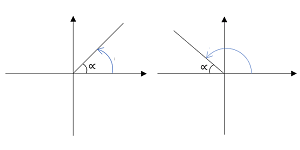
\begin{align} A & = 30^\circ, 180^\circ - 30^\circ \\ & = 30^\circ, 150^\circ \\ \\ \\ \therefore A & = 30^\circ, 150^\circ, 199.5^\circ, 340.5^\circ \end{align}
(ii)
\begin{align} y & = {3 \over 2} \cos 6x + 1 \\ \\ \text{Center line: } & y = 1 \\ \\ \text{Amplitude} & = {3 \over 2} \\ \\ \text{Max. value} & = 1 + {3 \over 2} = 2.5 \\ \\ \text{Min. value} & = 1 - {3 \over 2} = -0.5 \\ \\ \text{Period} & = {360^\circ \over 6} = 60^\circ \\ \\ \\ y & = 2 - {1 \over 2} \sin 3x \\ y & = - {1 \over 2} \sin 3x + 2 \phantom{000000} [\text{Inverted shape due to negative sign}] \\ \\ \text{Center line: } & y = 2 \\ \\ \text{Amplitude} & = {1 \over 2} \\ \\ \text{Max. value} & = 2 + {1 \over 2} = 2.5 \\ \\ \text{Min. value} & = 2 - {1 \over 2} = 1.5 \\ \\ \text{Period} & = {360^\circ \over 3} = 120^\circ \end{align}

(iii)
\begin{align*} \frac{3}{2} \cos 6x + 1 & = 2 - \frac{1}{2} \sin 3x \phantom{000000} [\text{At the points of intersection}] \\ 3 \cos 6x + 2 & = 4 - \sin 3x \phantom{000000} [\times 2] \\ 3 \cos 6x + \sin 3x - 2 & = 0 \\ 3 \cos 2(3x) + \sin 3x - 2 & = 0 \\ \\ \text{Replace } & 3x \text{ by } A, \\ 3 \cos 2A + \sin A - 2 & = 0 \phantom{000000} [\text{Same equation as (i)}] \\ \\ \text{For } 0^\circ \leq x \leq 120^\circ, & \\ 0^\circ \leq A & \leq 360^\circ \\ \\ \text{From (i), } A & = 30^\circ, 150^\circ, 199.5^\circ, 340.5^\circ \\ \\ x & = \frac{A}{3} \\ & = 10^\circ, 50^\circ, 66.5^\circ, 113.5^\circ \end{align*}
Question 10 - Circles★ Circle property
(i)
\begin{align} x^2 + y^2 + 4x - 6y & = 36 \\ x^2 + 4x + y^2 - 6y & = 36 \\ x^2 + 4x + \left(4 \over 2\right)^2 + y^2 - 6y + \left(6 \over 2\right)^2 & = 36 + \left(4 \over 2\right)^2 + \left(6 \over 2\right)^2 \phantom{000000} [\text{Complete the square}] \\ (x + 2)^2 + (y - 3)^2 & = 49 \\ [x - (-2)]^2 + (y - 3)^2 & = 7^2 \\ \\ \text{Radius} = 7 \text{ units, } & \text{Centre: } (-2, 3) \end{align}
(ii)
\begin{align} \text{Eqn of tangent: }3y & = 4x - 15 \\ y & = {4 \over 3}x - 5 \phantom{000000} [y = mx + c] \\ \\ \text{Gradient of tangent at } B & = {4 \over 3} \\ \\ \text{Gradient of } AB & = {-1 \over \text{Gradient of tangent at } B} \phantom{000000} [\text{Tangent perpendicular to radius}] \\ & = {-1 \over {4 \over 3} } \\ & = -{3 \over 4} \\ \\ y & = mx + c \\ y & = -{3 \over 4}x + c \\ \\ \text{Using } & A(-5, 5), \\ 5 & = -{3 \over 4}(-5) + c \\ 5 & = {15 \over 4} + c \\ {5 \over 4} & = c \\ \\ \text{Eqn of } AB: & \phantom{.} y = -{3 \over 4}x + {5 \over 4} \phantom{0} \text{--- (1)} \\ \\ \\ \text{Eqn of tangent:} & \phantom{.} y = {4 \over 3}x - 5 \phantom{0} \text{--- (2)} \\ \\ \text{Substitute } & \text{(1) into (2),} \\ -{3 \over 4}x + {5 \over 4} & = {4 \over 3}x - 5 \\ -{3 \over 4}x -{4 \over 3}x & = -5 - {5 \over 4} \\ -{25 \over 12}x & = -{25 \over 4} \\ x & = -{25 \over 4} \div -{25 \over 12} \\ x & = 3 \\ \\ \text{Substitute } & x = 3 \text{ into (1),} \\ y & = -{3 \over 4}(3) + {5 \over 4} \\ y & = -1 \\ \\ \therefore & \phantom{.} B(3, -1) \end{align}
(iii)
\begin{align} \text{Centre} & = \text{Midpoint of } AB \\ & = \left( {x_1 + x_2 \over 2}, {y_1 + y_2 \over 2} \right) \\ & = \left( {-5 + 3 \over 2}, {5 + (-1) \over 2} \right) \\ & = ( -1, 2) \\ \\ \text{Radius} & = \text{Distance between } A \text{ and centre} \\ & = \sqrt{ (x_2 - x_1)^2 + (y_2 - y_1)^2 } \\ & = \sqrt{ [-1 -(-5)]^2 + (2 - 5)^2 } \\ & = 5 \text{ units} \end{align}
(iv)
\begin{align} \text{Distance between (4, 6) and centre of } C_1 & = \sqrt{ (-2 - 4)^2 + (3 - 6)^2 } \\ & = 6.708 < \text{Radius of } C_1 \\ \\ \implies (4,6) & \text{ lies in } C_1 \\ \\ \text{Distance between (4, 6) and centre of } C_2 & = \sqrt{ (-1 - 4)^2 + (2 - 6)^2 } \\ & = 6.403 > \text{Radius of } C_2 \\ \\ \implies (4, 6) & \text{ lies outside of } C_2 \end{align}
Question 11 - Area bounded by curve and line★ Reverse of differentiation
(a)
\begin{align}
u & = x &&& v & = \sqrt{2x - 1} \\
& &&& & = (2x -1 )^{1 \over 2} \\
{du \over dx} & = 1 &&& {dv \over dx} & = {1 \over 2}(2x - 1)^{-{1 \over 2}} . (2) \phantom{000000} [\text{Chain rule}] \\
& &&& & = (2x - 1)^{-{1 \over 2}}
\end{align}
\begin{align}
{d \over dx} \left(x \over \sqrt{2x - 1}\right)
& = {v {du \over dx} - u {dv \over dx} \over v^2 }
\phantom{000000} [\text{Quotient rule}] \\
& = {(2x - 1)^{1 \over 2} (1) - (x)(2x - 1)^{-{1 \over 2}} \over [(2x - 1)^{1 \over 2}]^2 } \\
& = { (2x - 1)^{1 \over 2} - x(2x - 1)^{-{1 \over 2}} \over (2x - 1)} \times { (2x - 1)^{1 \over 2} \over (2x - 1)^{1 \over 2} } \\
& = { (2x - 1) - x(2x - 1)^0 \over (2x - 1)^{3 \over 2} } \\
& = { 2x - 1 - x (1) \over \sqrt{ (2x - 1)^3 } } \\
& = { x - 1 \over \sqrt{ (2x - 1)^3 } } \phantom{0} \text{ (Shown)}
\end{align}
(b)(i)
\begin{align}
y & = mx + c \\
y & = (1)x + c \\
y & = x + c \\
\\
\text{Using } & A(1, 0), \\
0 & = 1 + c \\
-1 & = c \\
\\
\text{Eqn of } AB: & \phantom{0} y = x - 1 \\
\\
\text{Substitute } & y = x - 1 \text{ into eqn of curve,} \\
x - 1 & = {8(x - 1) \over \sqrt{(2x - 1)^3}} \\
(x - 1) \sqrt{(2x - 1)^3} & = 8(x - 1) \\
0 & = 8(x - 1) - (x - 1)\sqrt{(2x - 1)^3}\\
0 & = (x - 1) \left[ 8 - \sqrt{(2x - 1)^3} \right]
\end{align}
\begin{align}
x - 1 & = 0 && \text{ or } & 8 - \sqrt{(2x - 1)^3} & = 0 \\
x & = 1 \text{ (Point } A) &&& 8 & = \sqrt{(2x - 1)^3} \\
& &&& 8^2 & = (2x - 1)^3 \\
& &&& 64 & = (2x - 1)^3 \\
& &&& \sqrt[3]{64} & = 2x - 1 \\
& &&& 4 & = 2x - 1 \\
& &&& 5 & = 2x \\
& &&& {5 \over 2} & = x
\end{align}
\begin{align}
\text{Substitute } & x = {5 \over 2} \text{ into eqn of } AB, \\
y & = {5 \over 2} - 1 \\
y & = {3 \over 2} \\
\\
y \text{-coordinate of } B & = {3 \over 2} \phantom{0} \text{ (Shown)}
\end{align}
(b)(ii)
\begin{align} \text{Area bounded by line } AB & = \text{Area of triangle} \\ & = {1 \over 2} \times \left({5 \over 2} - 1\right) \times {3 \over 2} \\ & = 1 {1 \over 8} \text{ units}^2 \\ \\ \text{Area bounded by curve} & = \int_{5 \over 2}^5 {8 (x - 1) \over \sqrt{(2x - 1)^3} } \phantom{.} dx \\ & = 8 \int_{5 \over 2}^5 {x - 1 \over \sqrt{(2x - 1)^3} } \phantom{.} dx \\ \\ \\ \text{From (a), } {d \over dx} \left(x \over \sqrt{2x - 1}\right) & = { x - 1 \over \sqrt{ (2x - 1)^3 } } \\ \\ \implies \int { x - 1 \over \sqrt{ (2x - 1)^3 } } \phantom{.} dx & = { x \over \sqrt{2x - 1} } \\ \\ \\ \therefore \text{Area bounded by curve} & = 8 \left[ { x \over \sqrt{2x - 1} } \right]_{5 \over 2}^5 \\ & = 8 \left[ 5 \over \sqrt{2(5) - 1} \right] - 8 \left[ {5 \over 2} \over \sqrt{2\left(5 \over 2\right) - 1} \right] \\ & = 3{1 \over 3} \text{ units}^2 \\ \\ \text{Area of shaded region} & = 1{1 \over 8} + 3{1 \over 3} \\ & = 4{11 \over 24} \text{ units}^2 \end{align}